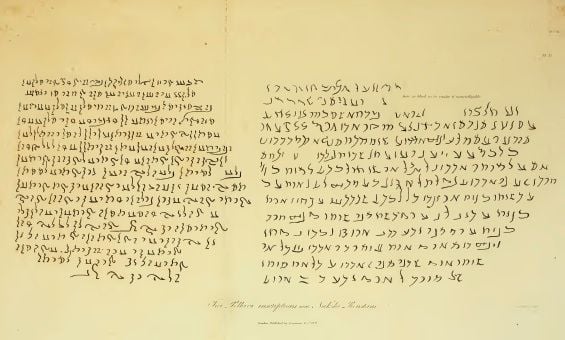
A bilingual inscription in Pārsīg and Pahlavānīg (Parthian) in a grotto some kilometers north of Persepolis, near the village of Ḥājiābād.
The version we present here along with an English translation, is based on MacKenzie’s work (1978) with some orthographic modification.
For a description of the inscription see here.
pārsīg
1- tigrāh ēn man mazdesn bay Šābuhr šāhān
2- šāh ērān ud anērān kē cihr az yazdān,
3- pus mazdesn bay Ardašēr šāhān šāh ērān
4- kē cihr az yazdān, nab bay Pābag šāh. u-n
5- ka ēn tigr vist, ēg-in pēš šahriyārān
6- ud vispuhrān ud vazurgān ud āzādān vist. u-n pāy ped
7- ēn darag nihād, u-n tigr tar hān cīdāg
8- bē abgand; bē ōy gyāg kū tigr abgand,
9- ānōh gyāg hān ōn nē būd kū agar cīdāg
10- cīd hē, ēg bērōn pēdāg būd hē.
11- pas amāh framād kē cīdāg ōrōndar
12- cīd. kē dast-nēv hē, hān pāy ped
13- ēn darag ēv nihed ud tigr ō hān
14- cīdāg ēv vihed, pas kē
15- tigr ō hān cīdāg abganed
16- ōy dast-nēv.
pahlavānīg
1- vidāvan im man mazdezn baγ Šābuhr
2- šāhān šāh aryān ud anaryān kē šihr až
3- yazdān, puhr mazdezn baγ Ardaxšahr šāhān šāh
4- aryān kē šihr až yazdān, puhrēbuhr baγ Pābag šāh.
5- ud kaδ amā im tiγr vist, parvān šahrδārān
6- vispuhrān vazurgān ud āzādān vist. pāδ pad ēd vēm
7- aveštād ud tiγr tar hō šīd bēh abgand. bē-ž
8- ōδ kū tiγr ōbast, hō zanag vyāg nē būd kū,
9- ag šīd dišt ahēndē ō bēh ārag āgas būd
10- ahēndē. aδyān amā ubdišt kē šīd ōrōnistar
11- dišt. avās kē dast-nēv ahānd, pāδ pad
12- im vēm hēβ avešted ud tiγr ō hō
13- šīd hēβ vihed. kē tiγr ō hō
13- šīd žāmeδ, hō-b dast-nēv ahend.
English (Pahlavānīg parts in brackets):
This bowshot is mine, the Mazdayasnian Majesty Šābuhr, king of kings of Aryans and non-Aryans, who is of the ciθra of the Yazata, son of the Mazdayasnian Majesty Ardašēr, king of kings of Aryans, who is of the ciθra of the Yazata, grandson of (His) Majesty Pābag, king.
And when We (= I) shot this arrow, then We shot it before the kings and princes and magnates and nobles.
And We (= I) put Our foot on this rock and We cast the arrow beyond that cairn; But that place [there] where the arrow was cast [fell], there the place was not such [was not that kind of place] that, if a cairn had been erected, it would have been visible outside. Then we commanded that the cairn be erected more in this direction.
[Now] whoever may be of good hands (/dexterous), let them put (their) foot on this rock and let them shoot an arrow towards that cairn. Then whoever casts [sends] an arrow to that cairn, his hands are [indeed] good.
Audio Pārsīg
Audio Pahlavānīg
 Made with Bullet